
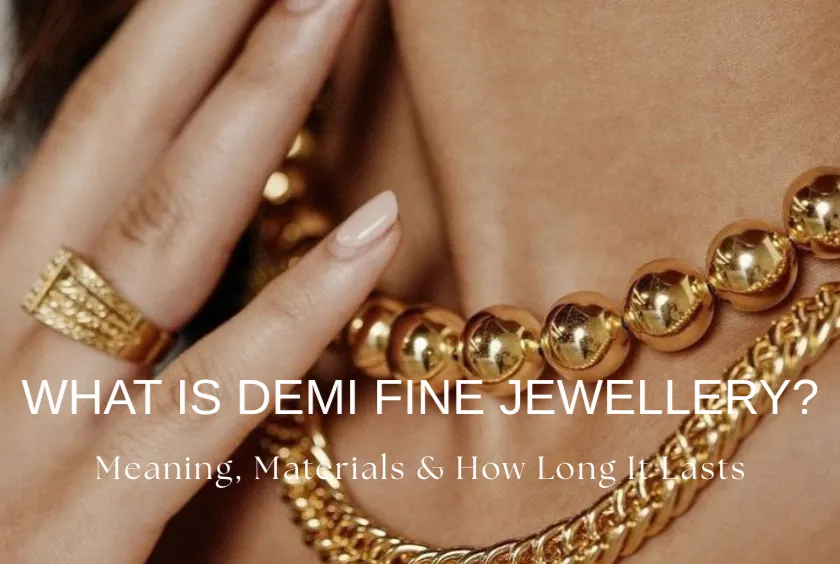
What Is Demi-Fine Jewellery? Meaning, Materials & Durability in India
If you love the look of fine jewellery but hesitate at fine jewellery prices, you’re not alone. In India, many of us want pieces we can wear to work, brunch, travel, and even festive occasions—without worrying that the shine will vanish after a few wears. That “middle ground” is exactly where demi-fine jewellery fits in: it’s designed to look premium, feel comfortable, and last longer than typical fashion jewellery—while staying far more affordable than solid gold.
In this guide, we’ll break down what demi-fine jewellery actually means, what it’s made of, how long it lasts in Indian conditions (heat, humidity, sweat, monsoon), whether it tarnishes, and how it compares with gold-plated and fine jewellery.
What Does Demi-Fine Jewellery Mean?
Demi-fine jewellery sits between fine jewellery (solid precious metals like gold/platinum) and fashion/costume jewellery (often inexpensive alloys and plating). Many brands describe demi-fine as “half fine”—meaning you still get quality materials and a premium finish, but not the full cost of solid gold.
In practical terms, demi-fine pieces commonly use:
-
Sterling silver (925) or stainless steel as a base
-
Higher-quality finishing like gold vermeil, thicker gold plating, or protective coatings
-
Sometimes semi-precious stones (depending on the brand/category)
What Materials Are Used in Demi-Fine Jewellery?
Materials matter because they determine durability, skin comfort, and tarnish resistance.
Gold vermeil
Gold vermeil is not “regular gold-plated.” By definition, it uses a thicker layer of gold over sterling silver—and many references cite at least 2.5 microns of gold thickness for vermeil. That thickness is a major reason vermeil tends to last longer and feel more “fine” than standard plating.
Sterling silver (925)
Sterling silver is a precious metal base used widely in demi-fine. It can oxidise over time (especially in humidity), but it is also cleanable and maintainable, which is a big advantage versus low-grade alloys.
Stainless steel (often “surgical grade”)
Some demi-fine brands use stainless steel as a base because it’s sturdy and generally more tolerant of daily wear. Many brands position it as skin-friendly compared with cheap imitation alloys.
Key takeaway: In demi-fine, the base metal + plating thickness + care instructions matter more than the label alone.
Demi-Fine Jewellery vs Fine Jewellery
Fine jewellery is typically made from solid gold (often 14K/18K), platinum, and genuine precious gemstones. It is built to last decades, and in India it’s often seen as an “investment-style” purchase or heirloom category.
Demi-fine jewellery is different: it’s built for everyday luxury—more accessible, more style experimentation, and less financial commitment.
Quick comparison
| Feature | Fine jewellery | Demi-fine jewellery |
| Metal | Solid gold/platinum | Sterling silver, vermeil, premium plating |
| Price | High | Mid-range / accessible |
| Durability | Highest | High (with care) |
| Best For | Heirlooms, long-term | Daily wear, gifting, travel, trend styling |
For a deeper comparison between solid gold and plated options, you can also read our detailed guide on solid gold vs gold plated jewelry.
Demi-Fine Jewellery vs Gold-Plated Jewellery
This is one of the most important comparisons for India, because many shoppers have experienced a familiar disappointment: a piece looks great in the beginning, then fades, dulls, or irritates the skin.
A key differentiator cited by competitors is that vermeil uses sterling silver as the base and a thicker gold layer, whereas regular gold-plated jewellery can use cheaper base metals and thinner plating.
If you’re deciding between the two, ask these questions:
-
What is the base metal? (Sterling silver tends to be safer than mystery alloys.)
-
How thick is the plating? (Thicker generally lasts longer.)
-
Is it marketed as anti-tarnish? (Even then, care matters.)
-
Is it meant for daily wear or occasional wear?
Does demi-fine jewellery tarnish in Indian weather?
This is the real-life question behind most “demi-fine” searches, especially in India where humidity, sweat, perfume, and monsoon moisture are everyday realities.
A truthful, customer-friendly answer is:
Yes, demi-fine jewellery can tarnish over time—but it typically tarnishes slower than low-quality fashion jewellery, and good materials/care make a major difference.
We’ve explained this in detail in our article on does demi-fine jewelry tarnish, including how humidity and daily wear affect it.
How long does demi-fine jewellery last in India?
There isn’t one universal number because it depends on:
-
plating quality (and thickness)
-
base metal
-
how often you wear it
-
exposure to sweat/water/perfume
-
how you store it
- Occasional wear (events, office, outings): can stay beautiful for a long time with basic care
- Daily wear (including heat/sweat/commuting): will last best if you remove it before showering/exercise and store it properly
Is demi-fine jewellery worth it in India?
For many buyers, yes—especially if your goal is everyday luxury without the cost of solid gold.
Demi-fine tends to be worth it if:
-
You want pieces that look premium in photos and real life
-
You prefer skin-comfortable materials (when sourced responsibly)
-
You want jewellery you can wear often (not just once a year)
-
You like changing styles without committing to solid gold every time
How to care for demi-fine jewellery in India
If you want demi-fine jewellery to stay bright through Indian summers and monsoon, the rules are simple:
-
Remove jewellery before showering, swimming, gym, or heavy sweating
-
Avoid direct contact with perfume, deodorant, hairspray, and skincare
-
Wipe after wear with a soft cloth (especially after humid outdoor time)
-
Store in a dry pouch/box; in monsoon, consider silica gel packs
-
Don’t mix pieces loosely (scratches reduce plating life)
For step-by-step cleaning methods, see our guide on cleaning gold plated jewelry at home.
Final thoughts
Demi-fine jewellery is a practical answer to a very Indian problem: we want jewellery that looks premium, feels comfortable, and survives real life—heat, humidity, workdays, travel, and celebrations—without demanding a fine-jewellery budget each time.
If you remember just one thing, make it this: focus on materials (like gold vermeil over cheap plating), good care habits, and honest expectations. That’s how demi-fine jewellery becomes a long-term favourite rather than a short-term disappointment. At Mystelle, this balance of everyday elegance, durability, and mindful craftsmanship is exactly what demi-fine jewellery is meant to offer.
FAQs
Is demi-fine jewellery good for daily wear in India?
Yes, many demi-fine pieces are designed for regular wear, but longevity improves significantly if you avoid water exposure and store them properly.
Is demi-fine jewellery waterproof?
Usually not truly “waterproof.” Water exposure can gradually wear down plating or affect stones over time; it’s best to remove jewellery before showering. You can also read more about water exposure in our guide on is gold plated jewelry waterproof.
What’s better: gold vermeil or gold-plated jewellery?
Gold vermeil generally lasts longer because it uses sterling silver as a base and is commonly defined with a thicker gold layer (often cited at 2.5 microns).
Can demi-fine jewellery cause skin irritation?
It depends on the base metal and manufacturing. Brands often position sterling silver and stainless steel as more skin-friendly than nickel-heavy imitation alloys.
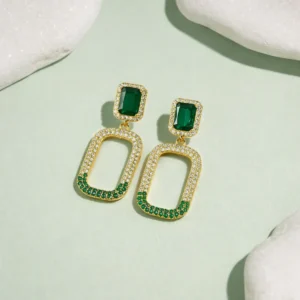 Bella Zirconia Earrings– 18K Gold Plated