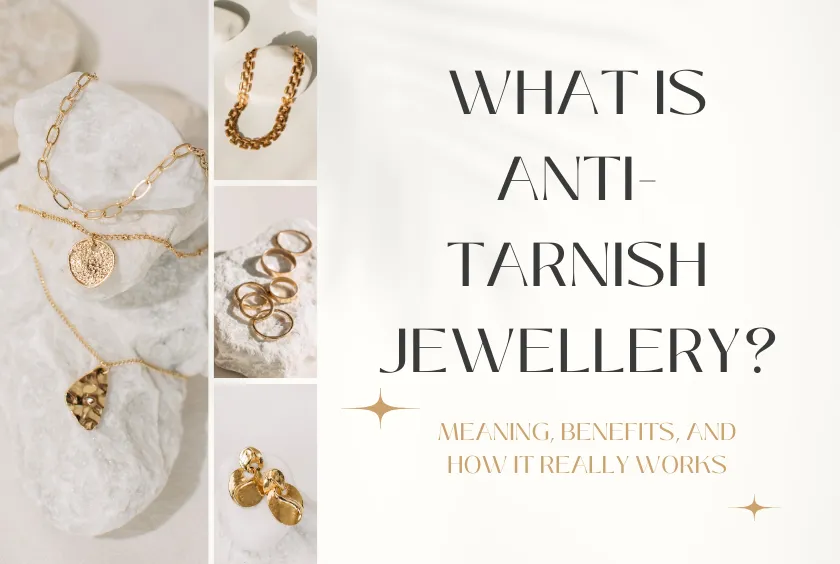
What is Anti-Tarnish Jewellery? Meaning, Benefits, and How It Really Works
If you’ve ever taken out a favourite ring or necklace only to find it looking dull, darkened, or slightly yellow, you already know how frustrating jewellery tarnishing can be. This is especially common when jewellery is worn often or exposed to humidity, sweat, perfume, or everyday skincare products.
In recent years, anti-tarnish jewellery has become a popular term among demi-fine jewellery brands. It’s often positioned as a solution for jewellery that tarnishes too fast. But what does anti-tarnish jewellery actually mean, and does anti-tarnish jewellery really work in real life?
Anti-tarnish jewellery is often discussed with bold promises, but the reality can feel confusing for buyers. This guide is designed to give you a clear, honest understanding of what anti-tarnish jewellery means, how it works, and what you should realistically expect—without exaggerated claims or confusing jargon.
What is Anti-Tarnish Jewellery?
Anti-tarnish jewellery refers to jewellery that is designed to slow down the tarnishing process, not eliminate it completely.
This distinction is important. Many descriptions online suggest that anti-tarnish jewellery will never fade or lose its shine. In reality, no jewellery that is worn regularly can promise that. Instead, anti-tarnish jewellery focuses on improving durability through better materials, protective finishes, and more thoughtful manufacturing.
The result is jewellery that keeps its appearance far longer than typical fashion jewellery, especially when worn and cared for properly.
Why Does Jewellery Tarnish?
Tarnishing is a natural chemical reaction that occurs when metals interact with their environment. Common causes include:
-
Moisture and humidity
-
Oxygen in the air
-
Sweat and natural skin oils
-
Perfumes, lotions, and cosmetics
-
Environmental pollution
In humid climates, tarnishing can happen faster. This is why many people search for anti-tarnish jewellery in India or jewellery that does not tarnish easily. The concern isn’t just beauty—it’s practicality.
How Does Anti-Tarnish Jewellery Work?
Anti-tarnish jewellery doesn’t rely on one single feature. Well-made pieces use a combination of materials and techniques to slow tarnishing.
Protective Coatings
Many anti-tarnish pieces are finished with clear protective layers or advanced coatings. These coatings act as a barrier, reducing direct contact between the metal and moisture or air.
Better Base Metals
The base metal plays a major role in how jewellery ages. Anti-tarnish jewellery commonly uses:
-
Sterling silver (925)
-
Gold vermeil instead of thin gold plating
-
Stainless steel for high-wear designs
Lower-quality alloys react more aggressively with air and skin, which is why inexpensive jewellery tends to tarnish quickly.
Thicker Plating and Improved Finishing
Not all gold-plated jewellery is the same. Thicker, evenly applied plating—combined with proper sealing—lasts significantly longer and wears more evenly over time.
Does Anti-Tarnish Jewellery Really Work?
The most accurate answer is: yes, with realistic expectations.
Anti-tarnish jewellery:
-
Tarnishes much more slowly than fashion jewellery
-
Holds its shine longer with normal care
-
Performs better for regular, everyday wear
However, it is not completely immune to wear. Daily exposure to water, sweat, and chemicals will still affect it over time.
Most disappointment happens when buyers expect perfection. When anti-tarnish jewellery is understood as longer-lasting, not permanent, it tends to meet expectations well.
We’ve explained this process in more detail in our article on does demi-fine jewellery tarnish, including how daily wear and environment affect jewellery over time.
Is Anti-Tarnish Jewellery Good for Daily Wear?
Many people specifically look for anti-tarnish jewellery for daily wear, and this is where demi-fine jewellery is particularly practical.
Anti-tarnish jewellery works well for:
-
Office wear
-
Casual outings
-
Travel
-
Long days when jewellery stays on for hours
Simple habits—such as removing jewellery before showering or workouts—can significantly extend its lifespan.
Anti-Tarnish Jewellery vs Regular Gold-Plated Jewellery
Understanding this difference helps buyers make informed decisions.
Regular gold-plated jewellery typically has:
-
Thinner gold layers
-
Lower-grade base metals
-
Faster wear with frequent use
Anti-tarnish jewellery usually offers:
-
Better base materials
-
Thicker, sealed plating
-
Slower tarnishing with proper care
The price difference often reflects manufacturing quality, not just branding.
For a broader comparison of jewellery materials, this article on solid gold vs gold-plated jewellery offers additional context.
How Long Does Anti-Tarnish Jewellery Last?
There’s no single lifespan that applies to every piece, but realistic expectations are:
-
Occasional wear: can look good for years
-
Daily wear with care: often lasts 1–3 years or longer
-
Daily wear without care: still lasts longer than fashion jewellery, though wear appears sooner
Longevity is always influenced by both craftsmanship and how the jewellery is treated.
If you want a clearer idea of how standard plating performs over time, this guide on how long gold-plated jewellery lasts breaks it down in detail.
How to Care for Anti-Tarnish Jewellery
Proper care doesn’t need to be complicated. Small habits make a big difference.
Simple care tips:
-
Apply perfume and skincare before wearing jewellery
-
Remove jewellery before workouts, showers, or swimming
-
Wipe gently with a soft cloth after use
-
Store in a dry pouch or box, especially during humid months
These steps help slow tarnishing and preserve shine.
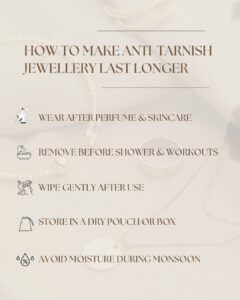
Simple care habits that help anti-tarnish jewellery last longer.
For step-by-step cleaning guidance, you may find our guide on cleaning gold-plated jewellery at home helpful.
Trends in Demi-Fine Jewellery You Might Not Notice
One quiet shift in the jewellery industry is the move toward functional luxury. Buyers increasingly want jewellery that looks refined but also fits everyday life.
Anti-tarnish finishes are becoming less about bold marketing claims and more about practical design choices. Brands that focus on material quality rather than exaggerated promises tend to earn longer-term trust.
Final Thoughts
Anti-tarnish jewellery isn’t about perfection—it’s about choosing jewellery designed to last longer and suit real life. Materials, construction, and care matter far more than buzzwords.
When these elements align, anti-tarnish jewellery becomes a practical, satisfying choice rather than a short-term solution. For those exploring demi-fine jewellery thoughtfully, brands like Mystelle approach anti-tarnish design with this balance in mind—focusing on longevity, comfort, and everyday elegance instead of exaggerated claims.
FAQs
Is anti-tarnish jewellery really anti-tarnish?
Anti-tarnish jewellery is designed to slow down tarnishing, not stop it completely. It uses better materials and protective finishes so jewellery stays shiny longer than regular fashion jewellery.
Does anti-tarnish jewellery really work for daily wear?
Yes, anti-tarnish jewellery generally works well for daily wear compared to regular gold-plated jewellery. However, basic care is still important to maintain its finish.
How long does anti-tarnish jewellery last?
With proper care, anti-tarnish jewellery can last for years with occasional wear and significantly longer than fashion jewellery with daily wear, though some wear over time is natural.
Is anti-tarnish jewellery waterproof?
Most anti-tarnish jewellery is not fully waterproof. Regular exposure to water can wear down protective coatings, so removing jewellery before showering or swimming is recommended.
Does anti-tarnish jewellery tarnish in humid weather?
Yes, it can still tarnish in humid conditions, but much more slowly than low-quality jewellery. Proper storage is especially important in humid climates.
How should anti-tarnish jewellery be cleaned and stored?
Anti-tarnish jewellery should be cleaned gently with a soft cloth and stored in a dry pouch or box when not in use. Avoid harsh chemicals and moisture.